My experience in House of Worship has taught me something different.
Structure is the vehicle for spontaneity. You cannot have momentum without structure. But structure, properly understood, does not suppress the unplanned — it creates space for it.
The Moment Beneath the Moment
Everyone is chasing the moment. Most are looking in the wrong place.
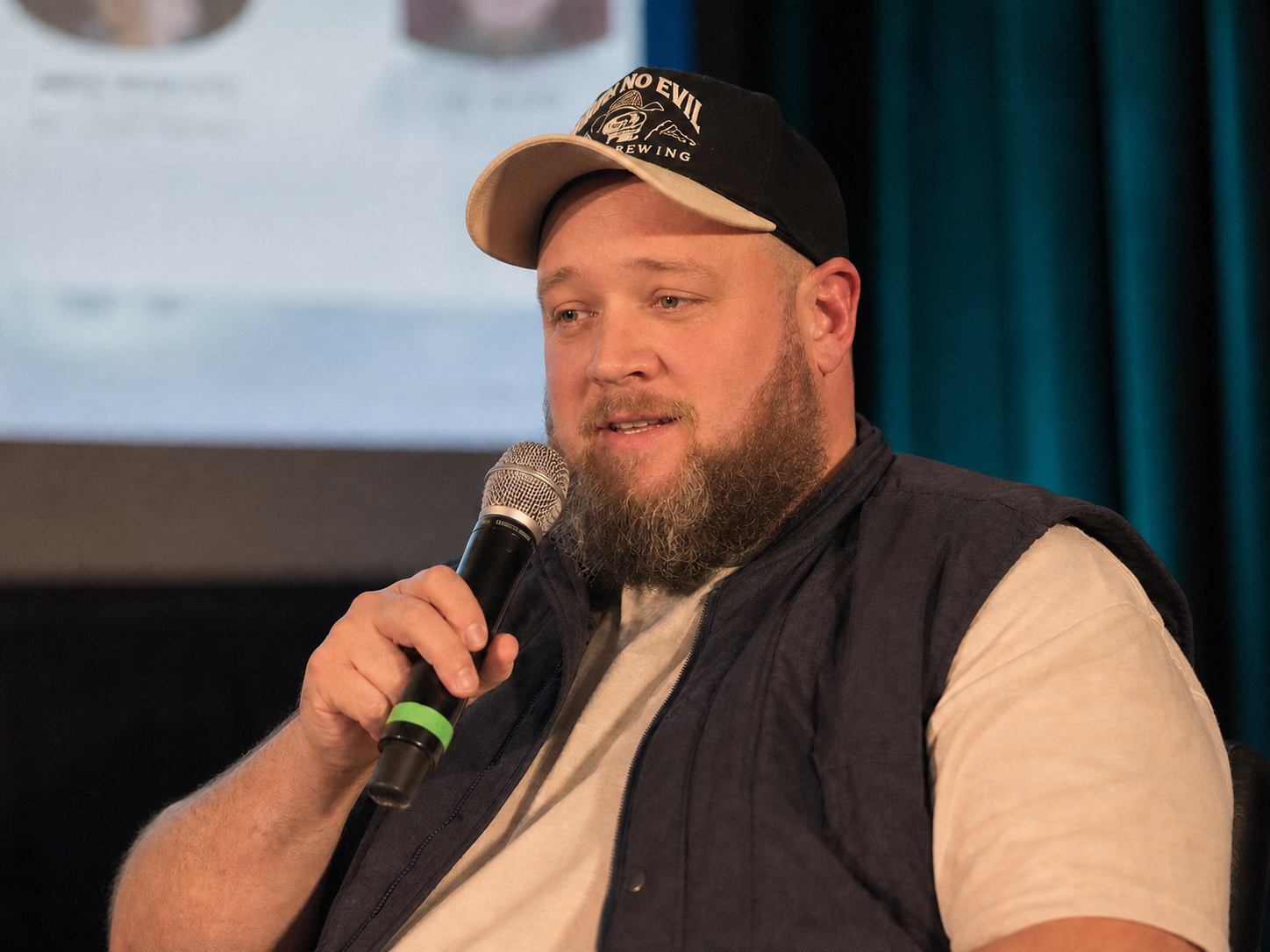
At Video Summit 2026, I shared a panel with some of the most accomplished live event producers in the world. Executives who have produced Super Bowls, White House summits, NATO gatherings, Olympic ceremonies, and major international championships.
The conversation was remarkable. The collective expertise in that room was undeniable.
And yet — as I listened to the frameworks being described — viral engineering, open architecture marketing, split-personality broadcast design, AI-driven personalization — I kept returning to a question nobody was asking:
What is the moment actually for?
This is not a criticism of my fellow panelists. They are brilliant at what they do.
It is an observation about the broader event industry. And it is the question I believe House of Worship production is uniquely positioned to answer.
Not because we have bigger budgets. Not because we have more advanced technology.
Because we have a different motive.
Authenticity Is Not a Strategy
The corporate event world has become very sophisticated about authenticity.
They study it. They engineer it. They design "open architecture environments" so attendees can generate unscripted content that feels spontaneous. They plan for the unplanned.
And they do it brilliantly. I have enormous respect for that craft.
But there is a fundamental difference between designing a space where authentic moments can happen — and being a community where authentic moments are already the point.
In 25 years working in House of Worship production — at Bethel Church, with megachurches across the country, in Cinema Live environments, and now consulting and teaching production teams — the filter for every single decision has never been "how do we create a moment?"
It has always been: how do we truthfully transport this?
There is a documentary filmmaking term — cinéma vérité — that translates as "to unveil truth."
That phrase has been the north star of my entire career. Not to manufacture truth. Not to simulate it. To unveil it.
Every piece of technology I choose, every camera position I select, every transition I design runs through one filter:
Does this help the truth reach someone who is not physically in the room?
That is a fundamentally different starting point than most of the event industry.
And I think it's time we said so out loud.
Structure Is the Vehicle for Spontaneity
One of the most interesting tensions on the panel was around scripted versus unscripted moments.
My corporate counterparts were thoughtful about this. They understood that unscripted moments carry a sincerity that scripted ones cannot replicate. But the framing was still largely about control — how do you protect the brand, maintain the message, and still leave room for things to breathe?
My experience in House of Worship has taught me something different.
Structure is the vehicle for spontaneity.
You cannot have momentum without structure. But structure, properly understood, does not suppress the unplanned — it creates space for it.
In a worship context, the sermon is scripted. The music is rehearsed. The technical cues are plotted.
And yet the most transformative moments are unplanned — but planned for.
The structure doesn't prevent something real from happening. It gives something real somewhere to land.
The challenge I want to raise to the industry is this: are we designing structure that truly creates space — or structure that only creates the appearance of space while quietly preventing anything truly unscripted from actually happening?
That's a question worth sitting with.
From Passive Listeners to Participants
The panel spent considerable time on audience engagement — making people want to share, want to come back, want to feel part of something.
The Australian Open redesigned their grounds to feel like Disneyland. Open Sauce built a community on Discord before the event even begins. Freeman designs "street to seat" experiences that turn every touchpoint into a moment.
All of this is excellent.
And House of Worship has been doing a version of it for centuries.
But what I think we do differently is not just engage the audience. We invite them into the experience itself.
There is a profound difference between someone watching a moment and someone having a moment.
The goal of everything I do technically — the camera work, the broadcast design, the hybrid production — is to erase the barrier between being in the room and being in the experience.
I have seen it happen on a Zoom call. On a mobile phone screen. I have seen people watching a church service on a laptop become as genuinely moved as anyone in the physical room — not because the production was flashy, but because it was honest.
The technology became transparent. The truth came through.
That is the goal.
Not passive listeners. Participants.
The Dimension the Industry Rarely Names
Near the end of the panel, after a beautiful comment about the human element of shared experience, I said something I want to say more clearly here:
A shared authentic experience is not just human. It is spiritual.
The event industry talks about moments that are "memorable" and "transformational." Those words are borrowed from the language of faith.
When someone leaves an event changed — not just entertained, not just informed, but genuinely different than when they walked in — something happened that goes beyond good production.
And the people who produce those experiences, whether in a stadium or a sanctuary, know exactly what I mean.
House of Worship production teams carry this weight every single week. They are not producing a conference. They are not producing an entertainment event.
They are facilitating an encounter.
The stakes are different. The intentionality is different. The skill set, the discernment, and the calling required — different.
That doesn't make us better than corporate producers.
It makes us different. And it is high time the broader industry recognized that the lessons coming out of House of Worship production are not niche.
They are foundational.
What the Industry Can Learn From Us
I want to be careful not to be self-congratulatory here.
House of Worship production has its own blind spots — we can be resistant to change, slow to innovate, sometimes more focused on what has always worked than what is actually working. The corporate world has much to teach us about scalability, personalization, and designing for diverse audiences.
But here is what I believe the event industry can learn from HOW:
Motive matters more than method. When the goal is truth rather than virality, the work changes. The questions you ask change. The compromises you refuse to make change.
The barrier between platform and participant is always the problem. Whether you are broadcasting a sermon or a summit, the goal is the same — close the distance. Make the person on the other side feel present, not observed.
Repeatability is not the enemy of transcendence. Critics of church production often say repetition kills the moment. My experience says the opposite. A community that gathers repeatedly around the same center develops a depth of shared experience that a one-time event simply cannot manufacture.
Your production team is a ministry. Not in a religious sense — in the original sense of the word. A minister is someone who serves. When production teams understand they exist to serve the experience and not showcase their craft, everything changes.
Shared excellence is always more powerful than individual brilliance. Lean on your team. Bring their excellence into the conversation, not just their execution. That is how you create shared experiences instead of produced ones.
The Moment Beneath the Moment
The moment beneath every moment is always the same thing.
A human being recognizing they are not alone.
That is what we are all trying to create — in stadiums, in sanctuaries, in boardrooms, on screens.
In House of Worship production, it is not a side effect of good event design.